How To Get Your First 1,000 Users: A Complete Growth Playbook for New Apps
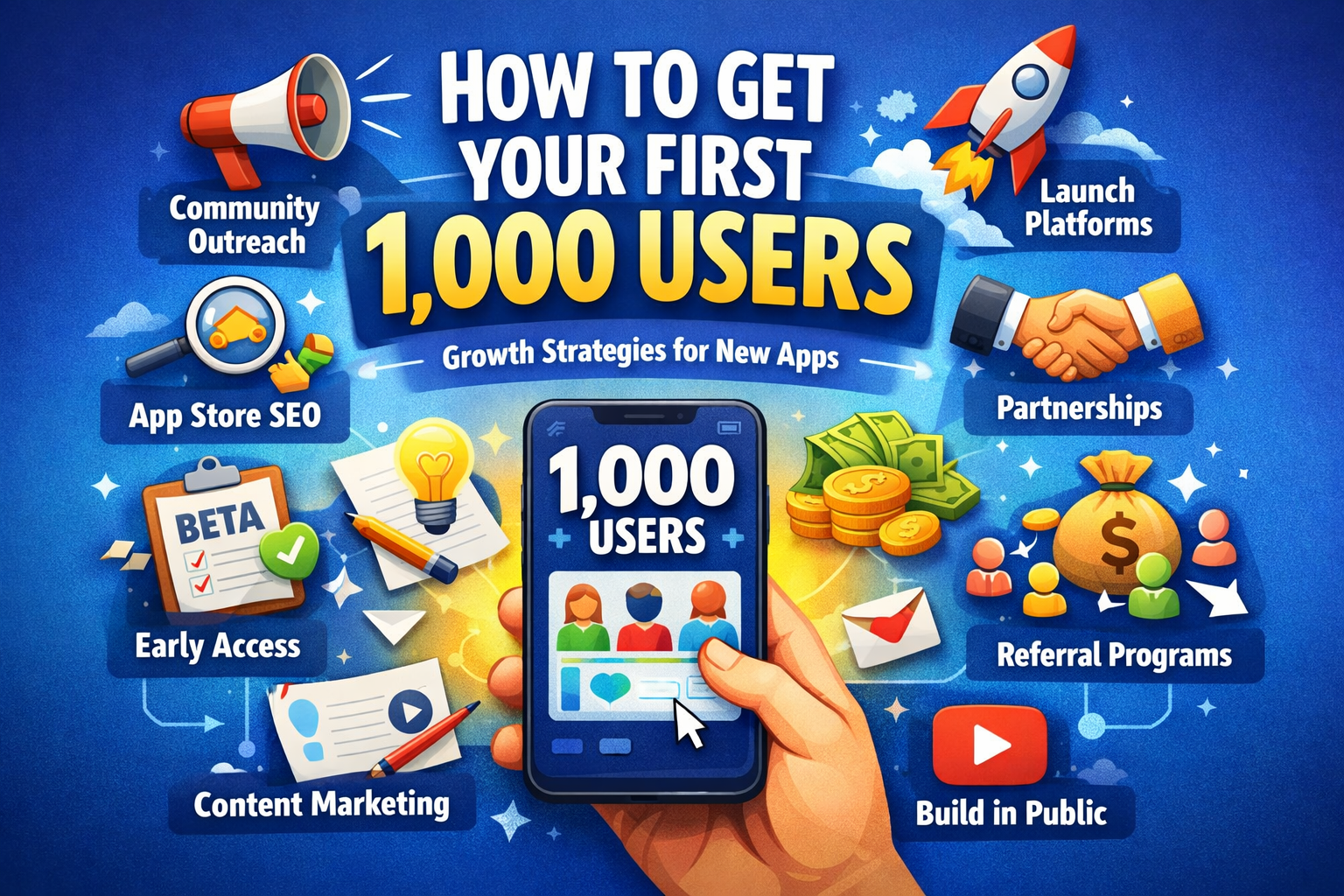
Launching an app is exciting. But the real challenge begins after release: getting your first 1,000 users.
Those early users are critical. They validate your product, provide feedback, and help create the momentum needed for long-term growth.
Many founders assume growth comes from ads or virality. In reality, the first 1,000 users usually come from scrappy, manual, and creative marketing efforts.
In this guide, you’ll learn proven strategies startups use to reach their first 1,000 users quickly.
Why the First 1,000 Users Matter
Your first users help you:
• Validate product-market fit
• Identify bugs and usability issues
• Generate testimonials and reviews
• Improve your onboarding experience
• Create early word-of-mouth growth
Without those first users, it's nearly impossible to refine your product.
Think of them as your beta community and growth engine combined.
1. Start With a Clear Ideal User
Before trying to acquire users, define who your product is for.
Ask yourself:
What problem does my app solve?
Who experiences this problem the most?
Where do these people spend time online?
Example:
If you built a password manager, your early adopters might be:
Developers
Privacy enthusiasts
Security-focused professionals
Knowing this lets you target specific communities instead of marketing blindly.
2. Launch in Communities That Already Exist
Communities are one of the fastest ways to get your first users.
Focus on places where your target audience already hangs out:
Top community platforms for early growth
• Reddit
• Indie Hackers
• Hacker News
• Discord communities
• Slack groups
• Facebook niche groups
Instead of spamming links, share your journey or insights.
Example post:
“I built a privacy-focused password manager after my accounts were compromised. Looking for feedback from people who care about security.”
Authentic posts convert much better than pure promotion.
3. Build in Public
“Building in public” has become one of the most effective growth strategies.
Share:
• product progress
• feature development
• lessons learned
• milestones
Platforms like:
• X (Twitter)
• LinkedIn
• Indie Hackers
Founders often gain hundreds of early users simply by documenting their progress.
People love supporting products they feel connected to.
4. Offer a Free Early Adopter Incentive
People are more likely to try new apps if they feel like early insiders.
Examples of incentives:
• lifetime discounts
• exclusive beta access
• special founder badges
• early adopter pricing
A simple message works well:
“The first 1,000 users get lifetime premium access.”
This creates scarcity and urgency.
5. Use App Store Optimization (ASO)
If you're launching a mobile app, App Store Optimization (ASO) is essential for early discovery.
Focus on:
Choose keywords with:
• low competition
• clear intent
• niche relevance
Example keywords:
secure password manager
private password vault
encrypted password storage
Metadata Optimization
Improve:
• app title
• subtitle
• description
• screenshots
• preview videos
Small ASO improvements can significantly increase organic installs.
6. Create High-Value Content
Content marketing compounds over time.
Create content that solves problems your users search for.
Examples:
• “How to Create a Secure Password Strategy”
• “Why Password Managers Are Essential in 2026”
• “How Hackers Steal Passwords”
Publishing SEO content helps you capture organic traffic and convert readers into users.
7. Launch on Product Platforms
Product launch platforms can generate a large spike of early users.
Top platforms include:
• Product Hunt
• BetaList
• AlternativeTo
• Indie Hackers launches
A well-executed launch can bring hundreds or even thousands of users in a single day.
Tips for success:
• prepare visuals and demo videos
• recruit supporters before launch
• respond quickly to comments
8. Partner With Micro-Creators
Influencers don’t need millions of followers.
Micro-creators (5k–50k followers) often convert better.
Reach out to creators in your niche and offer:
• free access
• affiliate commissions
• sponsorships
YouTube creators, bloggers, and newsletter writers are great partners for early growth.
9. Create a Referral Loop
Referrals are one of the most powerful growth channels.
Simple referral incentives include:
• extra features
• premium access
• extended trials
Example:
“Invite 3 friends and unlock premium features.”
This turns every user into a potential growth channel.
10. Personally Recruit Your First Users
Most founders overlook this.
For the first 1,000 users, manual outreach works extremely well.
Reach out to people who would genuinely benefit from your product.
Examples:
• developers on GitHub
• security professionals on LinkedIn
• niche community members
Send short personal messages:
“I built a privacy-first password manager and thought it might be useful for you. Would love your feedback.”
Early users appreciate being asked for input.
Growth Timeline to Reach 1,000 Users
A typical early growth path looks like:
Week 1–2
Community outreach + beta testers
Week 3–4
Content marketing + social sharing
Month 2
Product launch platforms + referrals
Month 3
SEO + partnerships
Many startups reach 1,000 users within 60–90 days using this approach.
Common Mistakes That Slow Growth
Avoid these early mistakes:
❌ Running ads too early
❌ Trying to target everyone
❌ Ignoring user feedback
❌ Overbuilding features before validation
Focus on learning and iteration, not perfection.
Final Thoughts
Getting your first 1,000 users isn’t about luck.
It comes from:
• talking to your audience
• sharing your story
• delivering real value
Most successful startups start exactly this way.
Your first users won’t just grow your product — they’ll help shape it.
✅ Pro tip: The fastest way to reach your first 1,000 users is to combine community engagement, ASO, and authentic storytelling.
Do that consistently, and growth becomes inevitable.