SKAN Privacy Thresholds: Fix Low Volume, Track the 24 Hour Timer

SKAN Privacy Thresholds: Fix Low Volume, Track the 24 Hour Timer
SKAN’s privacy thresholds group installs into crowd anonymity tiers, and when a campaign doesn’t generate enough installs, Apple withholds fine grained conversion values and source identifiers, producing null or truncated postbacks. These thresholds are volume based, tied to real time checks Apple runs per download, and the exact numbers are never published. For app marketers, this single mechanic shapes everything from campaign structure to how much you can trust the data in front of you.
TL;DR:
- Apple assigns privacy tiers to each download, not each campaign, and exact install thresholds remain unpublished; null fields indicate suppressed detail, not failed installs.
- Consolidate fragmented ad sets, since each must generate enough installs independently; roughly 100 daily installs per ad set is an industry heuristic, not Apple’s rule.
- Conversion values update within a rolling window of 24 hours, and each higher value restarts the timer; devices send postbacks within 24 hours after expiry.
- Track ad set null rates against server side events, label network estimates as modeled, and review a week’s data before changing budgets.
Table of Contents
- How crowd anonymity and privacy thresholds determine what SKAN returns
- Which postback fields are conditional, and what null really means
- Conversion value mechanics and the 24-hour postback timer
- Measurement implications: reporting, modeling, and optimization under thresholds
- Tactical steps to increase usable SKAN data
- How thresholds play out across different marketing scenarios
- Reading SKAN data without over-interpreting it
- Comparing threshold effects across app categories and install scales
- Measurement trade-offs and long-term priorities
- How Apptenium supports SKAN-era measurement
- FAQ
- Sources
How crowd anonymity and privacy thresholds determine what SKAN returns
Crowd anonymity is the rule set that keeps any single install from being individually identifiable. Instead of reporting on one person’s install, SKAN groups installs into tiers based on volume, and the tier assigned determines how much detail a postback can legally carry under Apple’s privacy model.
Conceptually, tiers run from the most restrictive (minimal or no conversion value, no source identifier) to the richest (full conversion value, more digits of source identifier, and source app ID). Where a given campaign lands depends on how many installs it generates within the measurement window, not on anything the advertiser configures directly.
Apple performs this check in real time for every download, assigning a postback data tier before the device ever sends a notification back to the ad network. That check happens silently, and there’s no dashboard that tells you which tier a given install landed in.
A few things to keep in mind as you plan around this system:
- Tiers are assigned per download, not per campaign as a whole.
- Higher install volume generally unlocks richer postback data, though Apple has never published the exact counts.
- Thresholds can shift without notice, so a tactic that worked last quarter may not hold today.
Trying to reverse engineer the exact numbers wastes time better spent on structural fixes, which we’ll get into later.
Which postback fields are conditional, and what null really means
Several fields in a SKAN postback are conditional, meaning they only appear when the install volume for that campaign or ad set clears Apple’s privacy bar. The conditional fields include:
- Conversion value (coarse or fine grained), which captures post install behavior.
- Source identifier digits, which narrow down which specific ad or creative drove the install.
- Source app ID or source domain, which identifies where the ad was shown.
Apple’s documentation confirms that these conditional values are included in postbacks only when crowd anonymity thresholds are met; otherwise they’re omitted or returned as null. A null conversion value doesn’t mean the install didn’t happen or that something broke. It means the campaign didn’t generate enough volume for Apple to safely attach that detail without risking individual identification.
One statistic worth internalizing: SKAdNetwork 4.0’s crowd anonymity tiers tie data granularity directly to install volume, with higher tiers returning more identifier digits and fine grained conversion values, while low tiers may return no conversion value at all. That single design choice explains most of the measurement confusion marketers run into when comparing SKAN reports across campaigns of different sizes.
Some ad networks model these null conversions statistically rather than leaving them blank, which we’ll cover in the measurement section below.
Conversion value mechanics and the 24-hour postback timer
Conversion values are compact, six bit values your app sets to represent post install events like a completed tutorial, a purchase, or a subscription start. Understanding the timer that governs them matters as much as understanding the values themselves:
- The app calls
updateConversionValueto set or raise the conversion value, and a rolling 24-hour timer restarts each time a larger value is set. - The timer eventually expires once no higher conversion value is set within the 24-hour window, locking in the final value for that install.
- The device sends the postback within 0 to 24 hours after expiry, and that postback only contains a conversion value if Apple’s privacy threshold for that install is met.
- Up to three postbacks are possible per install, each tied to its own timer window, with later postbacks subject to the same threshold checks as the first.
This means a well designed conversion value strategy should prioritize events that are reliable signals of long term value and that can realistically fire within the timer window, rather than cramming in every possible event and hoping the timing lines up.
Measurement implications: reporting, modeling, and optimization under thresholds
Once you accept that thresholds withhold data by design, the mental shift is from device level truth to aggregated, statistical estimation. You’re no longer reconciling individual installs one to one. You’re working with a dataset that has deliberate gaps, and your reporting needs to account for that.
Practical monitoring habits make the difference between flying blind and making informed calls:
- Track your null rate by campaign and ad set, not just in aggregate.
- Compare SKAN returns against server-side events from your own app analytics to spot mismatches.
- Use modeled estimates from your ad networks when available, but label them clearly as modeled, not measured.
- Build in sanity checks that flag when a campaign’s SKAN data looks unusually sparse relative to its spend.
Ad platforms like Snapchat document that null conversions occur specifically when privacy thresholds aren’t met, and some networks model those conversions statistically in their own reporting. Treating a null rate spike as an automatic sign of broken tracking leads teams astray. Often it’s the privacy system working exactly as intended.
Pro Tip: Build a weekly null rate trend line per ad set, since a sudden jump usually points to a volume drop crossing a threshold boundary, not a tracking failure.
Tactical steps to increase usable SKAN data
You can’t control Apple’s thresholds directly, but you can control the volume and structure that determine which tier your installs land in.
- Consolidate ad sets rather than fragmenting budget across dozens of narrow audiences, since each split ad set has to independently clear the volume bar.
- Allocate enough daily budget per ad set to push toward higher install counts; industry guidance suggests aiming for roughly 100 installs per day per ad set as a practical heuristic, though Apple publishes no official number.
- Prioritize fast feedback creatives that generate installs quickly enough to matter within the measurement window, rather than slow burn assets that trickle in over weeks.
- Use server-side joins between your own event data and ad network reporting to catch discrepancies before they skew budget decisions.
- Model null conversions statistically where your network supports it, and keep raw, unsuppressed signals on your side for cross-checking later.
Consolidation alone often does more for data quality than any reporting fix.
How thresholds play out across different marketing scenarios
A subscription app running a single, tightly targeted lookalike campaign with modest daily spend is a common case where thresholds bite hardest. If that ad set generates only a handful of installs a day, most postbacks likely come back null, leaving the marketing team with spend data but no attached conversion signal to judge creative or audience performance.
Compare that to a hypergrowth gaming app running broad, high spend campaigns across multiple networks simultaneously. Those campaigns clear volume thresholds easily, which means richer conversion values and more source identifier digits flow back consistently, giving the performance team enough granularity to optimize creative rotation and bidding in near real time.
A mid-size ecommerce app sits in between. Early in a campaign’s life, before spend ramps, null rates can run high. Once budget and audience settings stabilize and daily installs grow, the same campaign can shift into a richer tier within days, with no change to the product or creative, just a change in volume.
Seasonal or flash sale campaigns present a distinct challenge: a short burst of spend might generate strong volume for a few days, qualifying for richer data, then drop off sharply once the promotion ends, reverting to sparser postbacks. Teams that don’t account for this swing sometimes misread a short term null rate spike as a tracking problem rather than a natural consequence of spend tapering off.
The throughline across each scenario is the same: tier access tracks installs per ad set, not app size, budget tier, or vertical. A small app running concentrated, high volume campaigns can outperform a larger app that spreads spend too thin.

Reading SKAN data without over-interpreting it
The most common mistake we see is treating SKAN postbacks as a precise, device-level ledger instead of a privacy constrained signal. Before drawing conclusions from a report, check whether the campaign or ad set in question plausibly cleared a reasonable install threshold during the measurement window. If not, a high null rate or missing conversion value tells you about volume, not about creative quality or audience fit.
When comparing two campaigns, normalize for install volume before comparing conversion value richness. A campaign with 500 installs a day and full conversion values isn’t necessarily performing better creatively than one with 50 installs a day returning mostly nulls. It may simply be large enough to clear a higher tier.
Cross-reference SKAN data with your own server-side events whenever a decision carries real budget weight. If your internal analytics show healthy retention or revenue from a cohort that SKAN reports as mostly null, trust the fuller picture from your own systems over the thresholded postback alone. Teams that connect data from Firebase, Google Analytics, and ad networks in one place tend to catch these mismatches faster than those checking each source separately.
Finally, resist the urge to make week over week decisions on sparse data. A single day of low installs crossing a threshold boundary can swing your null rate dramatically without reflecting any real change in campaign performance. Look at rolling averages over at least a week before reacting.

Comparing threshold effects across app categories and install scales
Install volume, not app category, is the primary driver of which tier a campaign lands in, but category does shape how easily that volume is reached. Games and other apps with low cost per install and broad audience appeal tend to clear thresholds faster simply because they can generate more daily installs per dollar spent. Niche B2B or subscription apps with a narrower audience and higher cost per install often struggle to hit the same volume within a single ad set, even with comparable budgets.
At small scale, a new app launching with limited daily budget across several ad sets will likely see null rates across most campaigns, regardless of category, simply because no single ad set is generating enough installs. At mid scale, once total daily installs climb into the hundreds, categories with concentrated audiences (like a flagship gaming title) tend to clear thresholds more consistently than fragmented campaigns for a specialty utility app. At large scale, with thousands of daily installs spread across well structured ad sets, most categories see consistently richer postback data, and the differences between categories narrow considerably.
The practical takeaway: an app’s category affects how much budget and creative work is needed to reach threshold-clearing volume, but it doesn’t change the underlying mechanic. Apple’s crowd anonymity model applies the same volume-based logic whether you’re running a puzzle game or a productivity app. For developers weighing App Tracking Transparency implementation choices alongside SKAN setup, the same principle holds: privacy architecture treats volume, not vertical, as the deciding factor.
Measurement trade-offs and long-term priorities
Chasing device-level parity with pre-privacy attribution is a losing game, and we’d rather see teams measure directionally: is this channel trending up, is this creative outperforming that one, is volume growing. Precision at the individual level isn’t coming back.
The highest leverage move is almost always structural: consolidate fragmented ad sets, push more volume through fewer paths, and invest in modeling and cross-signal verification instead of chasing exact threshold numbers that Apple has never published and won’t confirm.
— Mike
How Apptenium supports SKAN-era measurement
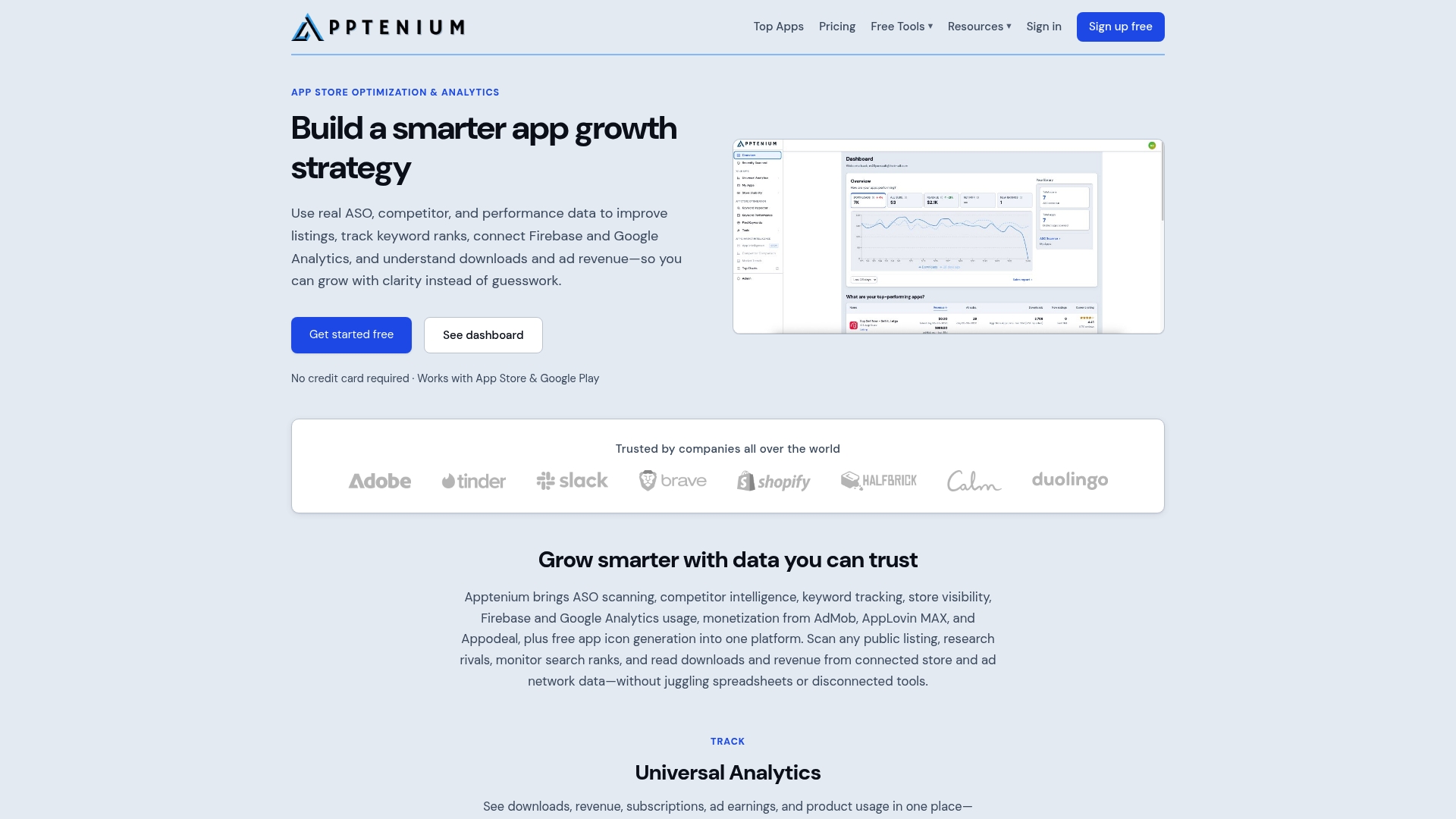
We built Apptenium to pull your downloads, revenue, and ad performance into one place, so you’re not stitching together SKAN postbacks, Firebase events, and ad network dashboards by hand. When conversion values come back sparse, having your own server-side and revenue data close at hand makes the gaps easier to interpret rather than guess at. Our ASO tools also surface AI-generated, copy-ready fixes for your listing, so the organic side of your growth isn’t left waiting on ad measurement to catch up.
| What you get | Why it matters for SKAN-era measurement |
|---|---|
| Unified analytics from Firebase, Google Analytics, and ad networks | Cross-check sparse or null SKAN postbacks against your own event data |
| AI-powered listing recommendations | Grow organic installs that don’t depend on ad attribution at all |
| Competitor and keyword tracking | Spot where organic opportunity can offset thresholded ad data |
Our Free plan lets you run limited scans each month at no cost, and Pro unlocks unlimited scans and premium features for $9.99 per month. Connect your app analytics and see where your organic and paid signals line up.
FAQ
Should I turn off privacy preserving ad measurement on my iPhone?
That setting controls whether your device participates in Apple’s privacy preserving ad measurement system, separate from whether apps can request tracking through App Tracking Transparency. Turning it off is a personal privacy choice, and it does not change how SKAN’s crowd anonymity thresholds work for app marketers measuring campaigns.
What does SKAN mean?
SKAN is shorthand for SKAdNetwork, Apple’s privacy preserving framework for ad attribution. It lets ad networks measure install campaigns without identifying individual users, using crowd anonymity tiers to decide how much detail each postback can include.
What is SKAN Singular Net?
Singular Net typically refers to a specific mobile measurement partner’s implementation or reporting layer built on top of SKAdNetwork, rather than an Apple-defined term. Definitions vary by vendor, so check your measurement partner’s own documentation for how it labels and processes SKAN data.
What should I turn off on my iPhone for privacy?
Individual privacy settings depend on personal preference and are managed through your device’s Privacy and Security settings, covering things like location services, ad personalization, and app tracking permissions. These choices affect your own device experience and are separate from how marketers encounter crowd anonymity thresholds at the campaign level.
How do null conversions affect my campaign reporting?
A null conversion means the install didn’t carry a conversion value because the campaign or ad set didn’t clear Apple’s privacy threshold, not that the install failed. Some ad networks model these null conversions statistically, so compare modeled estimates against your own server-side events before adjusting budget.